
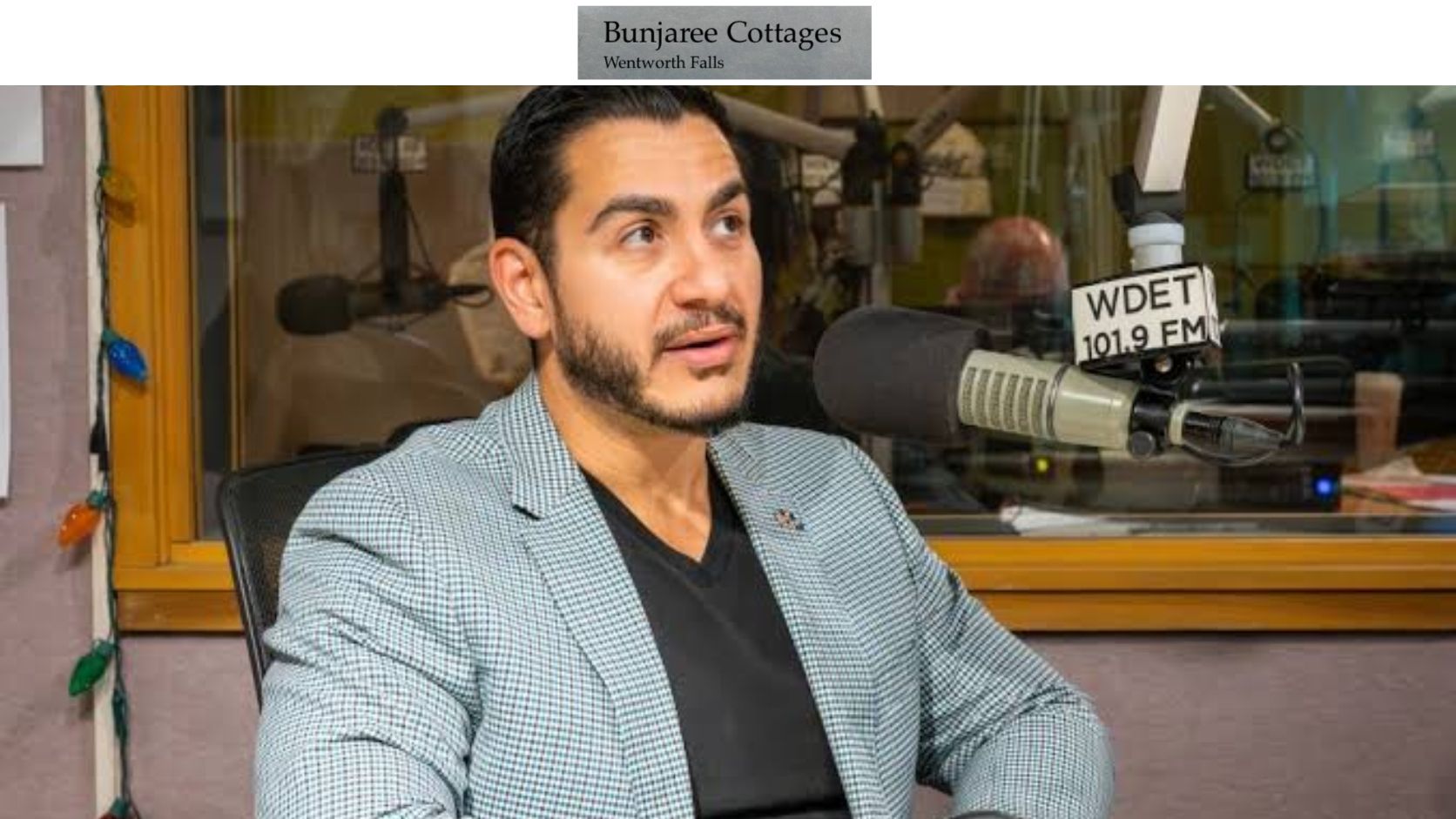
Abdul El-Sayed is 42 years old and has become one of the most talked-about figures in American politics following his historic victory in Michigan’s U.S. Senate election. The Democratic candidate defeated Republican Mike Rogers in a closely watched contest, becoming the first Muslim elected to the United States Senate. His victory has brought renewed attention to his age, family background, education and career in public health.
Born on October 31, 1984, in Rochester Hills, Michigan, El-Sayed celebrated his 42nd birthday just three days before the November 3 election. His journey from physician and epidemiologist to senator-elect represents a significant political achievement, particularly for someone who had previously experienced defeat in a statewide election.
How Old Is Abdul El-Sayed?
Abdul El-Sayed is 42 years old as of November 2026. His full name is Abdulrahman Mohamed El-Sayed, and he was born on October 31, 1984, in Rochester Hills, a suburb of Detroit.
His age has attracted attention because he has already established a substantial career across medicine, public health administration, academia and politics.
At 30, he became executive director of the Detroit Health Department, taking responsibility for improving public health services in a city recovering from financial difficulties.
He later entered electoral politics, challenging established Democratic figures and developing a reputation as a progressive candidate focused on healthcare reform.
His Senate victory at 42 marks another important milestone in a career that has combined scientific training with public service.
Abdul El-Sayed’s Early Life and Family
El-Sayed grew up in southeastern Michigan in a family with Egyptian immigrant roots. His father, Mohamed El-Sayed, moved to the United States from Egypt to pursue higher education at Wayne State University.
He was raised partly by his father and stepmother, Jacqueline, who also worked as an engineer. His biological mother, Fatten Elkomy, pursued a career in psychiatric healthcare.
Growing up in the Detroit area, El-Sayed developed interests in academics, athletics and community involvement.
He attended Bloomfield Hills High School, where he participated in football, wrestling and lacrosse. His involvement in team sports became an important part of his early development.
His family background also shaped his understanding of American identity, immigration and religious diversity.
As a Muslim American with Egyptian heritage, El-Sayed has frequently discussed the relationship between his upbringing and his commitment to public service.
Education and Medical Career
El-Sayed attended the University of Michigan, graduating in 2007 with degrees in biology and political science.
His academic achievements earned him a Rhodes Scholarship, allowing him to study at the University of Oxford in England.
He completed a doctorate in public health at Oxford in 2011 before earning his medical degree from Columbia University in 2014.
His education provided a foundation for his subsequent work in epidemiology, a field concerned with understanding patterns of disease and improving population health.
He later joined Columbia University’s Mailman School of Public Health as an assistant professor of epidemiology.
In 2015, El-Sayed returned to Michigan to lead the Detroit Health Department. His responsibilities included addressing health inequalities, improving access to services and rebuilding public health infrastructure.
He subsequently served as director of Wayne County’s Department of Health, Human and Veterans Services, further expanding his experience in government administration.
Although he earned a medical degree, he did not complete a clinical residency and is not licensed to practice medicine.
Abdul El-Sayed’s Historic Senate Victory
El-Sayed won Michigan’s U.S. Senate election on November 3, 2026, defeating former Republican congressman Mike Rogers.
The contest became one of the most closely followed races of the midterm elections because Democrats were defending the seat being vacated by retiring Senator Gary Peters.
Earlier in the year, El-Sayed secured the Democratic nomination after defeating Representative Haley Stevens in a competitive primary.
His campaign emphasized universal healthcare, reducing living costs, campaign finance reform and improving economic opportunities for working families.
The general election also featured intense disagreements over foreign policy, particularly American support for Israel.
During the campaign, El-Sayed faced criticism from prominent Republicans, including President Donald Trump, over his political positions and Muslim identity.
Despite those attacks, he secured enough support to win the election, making history as the first Muslim elected to the U.S. Senate.
Following the result, El-Sayed addressed supporters in Detroit and expressed gratitude for their efforts throughout the campaign.
His victory also demonstrated the growing influence of progressive political movements within the Democratic Party.
Wife, Children and Personal Life
Abdul El-Sayed is married to Sarah Jukaku, a psychiatrist whom he met while attending the University of Michigan.
The couple married in 2006 and have two daughters. They live in Ann Arbor, Michigan.
His wife has generally maintained a comparatively private profile, although her professional background in psychiatry reflects the family’s strong connection to healthcare.
El-Sayed has occasionally discussed how fatherhood influences his political priorities, particularly his views on education, healthcare and the future facing younger generations.
Beyond politics, he has written books addressing public health and government policy, including Healing Politics and Medicare for All: A Citizen’s Guide.
His combination of academic experience, family responsibilities and political activism has helped shape his public identity.
What Comes Next for Abdul El-Sayed?
Following his election victory, El-Sayed is preparing to assume office in January 2027, succeeding Gary Peters as one of Michigan’s two U.S. senators.
His arrival in Washington will place him at the center of national debates over healthcare, economic policy and government spending.
At 42, he enters this new chapter with experience in public health leadership and political campaigning, although he has never previously held elected office.
His historic election has already established an important place for him in American political history. The next challenge will be translating the promises of his Senate campaign into legislative work.
For now, Abdul El-Sayed’s age, educational achievements and unexpected political rise remain central to the story of a Michigan-born physician who became the first Muslim elected to the United States Senate.